I love clothes that tell a story.
Natalie Kovarik grew up in the rugged beauty of Montana, where her ranching roots run generations deep. As a young girl, she didn’t think of denim as a trend or a uniform. It was simply what you wore. Her dad wore his favorite jeans every day, just like her husband does now. And her sons? They love it all the same. “My oldest always wanted to wear denim just like his granddad.”
For Natalie, denim is stitched into her everyday life. As a rancher and mother, it’s less about singular standout moments and more about the continuity of life lived in denim: fencing, branding, chores, and chasing after her boys. “It’s all the moments,” she says. “It’s what we all live in.”
Natalie is also a podcaster and agricultural advocate. She uses her platform to bridge the rural-urban divide, offering an honest window into ranch life while exploring the power of women in agriculture.
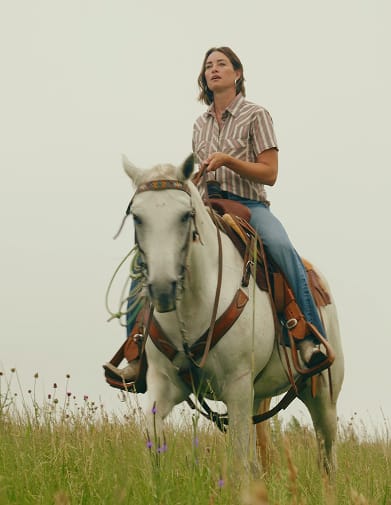
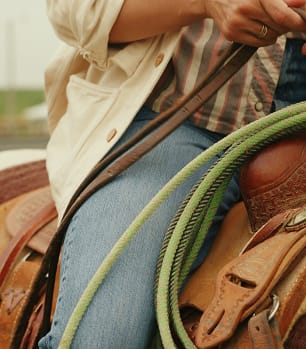
From her Montana thrift store days to her current closet in Nebraska, she gravitates toward clothes with character, comfort, and a story. For her, a good pair of jeans has always been worth the investment. “Jeans can do wonders for an outfit,” she says. “I wanted something that made me feel confident, but could still do ranch work.”
That balance, between the look and the utility, is where her style begins. Jeans are her foundation, and everything else builds from there: a flannel, a jacket, a sense of ease. Her go-tos are sturdy men’s jeans, but she also appreciates brands with more elevated styles.
Off the ranch, it’s all about expression. On the ranch, durability is key. Even as a kid, Natalie remembers her dad’s old denim being put to work—cut into patches to protect their cattle’s eyes, made into a quilt, and even sewn into a teddy bear. They’re just a few examples of how clothing, when made well, can live many lives.
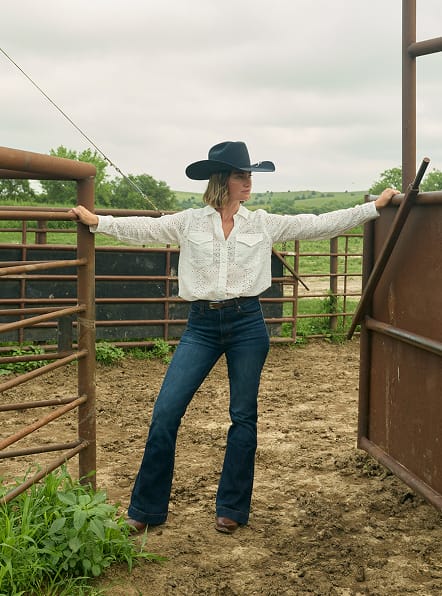
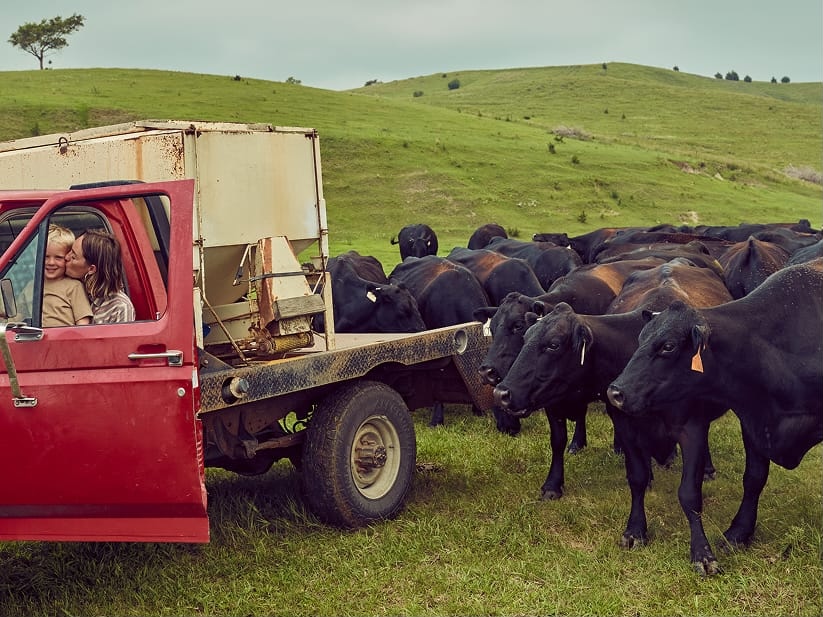
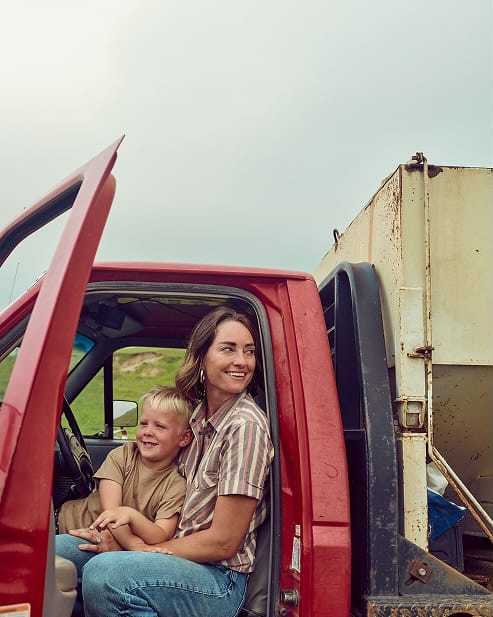
To Natalie, sustainable fashion means being thoughtful: choosing natural materials and brands that support the communities they serve, sourcing locally, and thrifting. She believes in investing in quality pieces that can be passed on, worn in, and worn out, and then recycled when their lives are truly over.
Sustainability is about intentionality.
The longevity of denim matters to Natalie, and so does where it comes from. She’s recently rediscovered the beauty of natural fibers like cotton. “I’m still dumbfounded how we ever lost our way from natural fibers like wool and cotton,” she says. “One high-quality layer outperforms all the others.”
She’s excited to see what her denim can become by recycling with Cotton’s Blue Jeans Go Green program. Natalie’s hope for the future of denim? More USA-made, better sizing for women, and a continued shift toward quality over quantity. “It’s not about having more,” she says. “It’s about having better.”